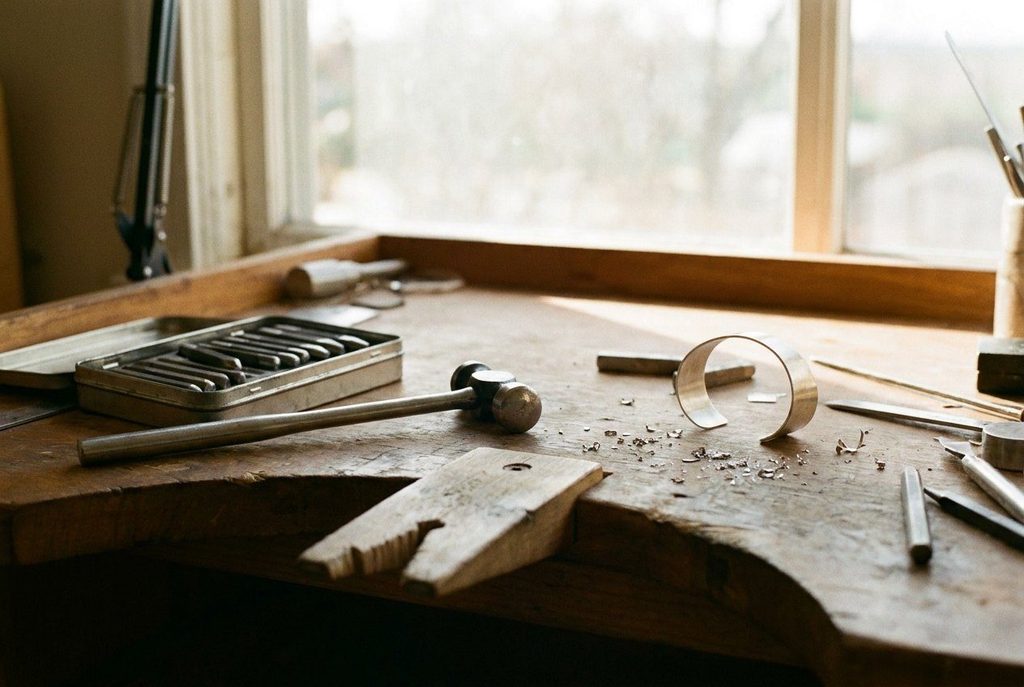
A rug, a bracelet or a pot made by hand carries the maker's time and skill. A few plain questions help you know what you are buying and who you are paying.
- Where to see it
- At fairs and markets where makers sell their own work
- Look for
- A maker's hallmark stamped on the back of silver: initials or a small symbol that identifies who made it.
The Four Corners is one of the best places anywhere to see and buy Native-made work: Navajo weaving and silver, Pueblo pottery, Hopi carving and much more. It is also a region where imitations are common, and where the difference between a handmade piece and a factory copy is not always obvious on a shop shelf. None of this is difficult once you know what to ask.
What the law says
The United States has a law written for exactly this. The Indian Arts and Crafts Act of 1990 makes it illegal to offer or display any art or craft product in a way that falsely suggests it was made by an American Indian, or by a member of a particular tribe, when it was not. In practice it is a truth-in-advertising law. If a seller describes a piece as Navajo-made, Native-made or Zuni, that description has to be true.
That gives you a simple tool: ask, and expect a clear answer. A seller who is vague about who made something, or says only that it is in the Native style, is telling you something.
Questions to ask
- Who made it? A name, a family, a community. Many makers sign their work; silversmiths often stamp a hallmark on the back.
- How was it made? Hand-stamped or cast silver, hand-spun or commercial yarn, hand-coiled or poured pottery. Makers like talking about their methods.
- What is it made of? Sterling silver should be marked. Turquoise may be natural, stabilised (treated with resin to harden it), or block material made from powder and dye. All three are sold; only the first two are turquoise in the usual sense, and the seller should tell you which.
- Is it old? Older pieces, sometimes called pawn when they come out of the old trading-post pawn system, are sold widely. Age is hard to judge, so be cautious about price claims based on it.
Buying from the maker
The surest way is to buy directly from the person who made the piece, at a fair or market where makers sell their own work. The money goes straight to them, you can ask anything, and you leave knowing the story of what you bought. The region's fairs, including the big autumn fair at Shiprock described in the Farmington story, bring many makers together.
Some practical courtesies help. Ask before photographing a person or their work. Do not haggle hard over handmade work; a fair price recognises weeks of labour, and in the case of a fine rug, months. Cash is still common at markets, though many makers take cards.
Learning to see the difference
The best protection is an educated eye. Spend time with old and new work in museums first. With silver, look at the back as well as the front: hand-stamped pieces show small irregularities between the strikes, cast pieces carry the texture of their mould, and factory pieces tend to be thin and perfectly even. With rugs, the notes on Two Grey Hills weaving cover edges, corners and flatness. With silver, the story on how Navajo silversmithing began explains stamping and casting.
And remember that some things are not for sale at all. Ceremonial objects, and images of some ceremonies, belong to the communities that hold them. When a maker tells you something is not offered, that is the end of the conversation.
Getting there: fairs and markets across the region. Bring: a list of questions and a small magnifier. More in made by hand. Pictures are credited on the pictures page.